
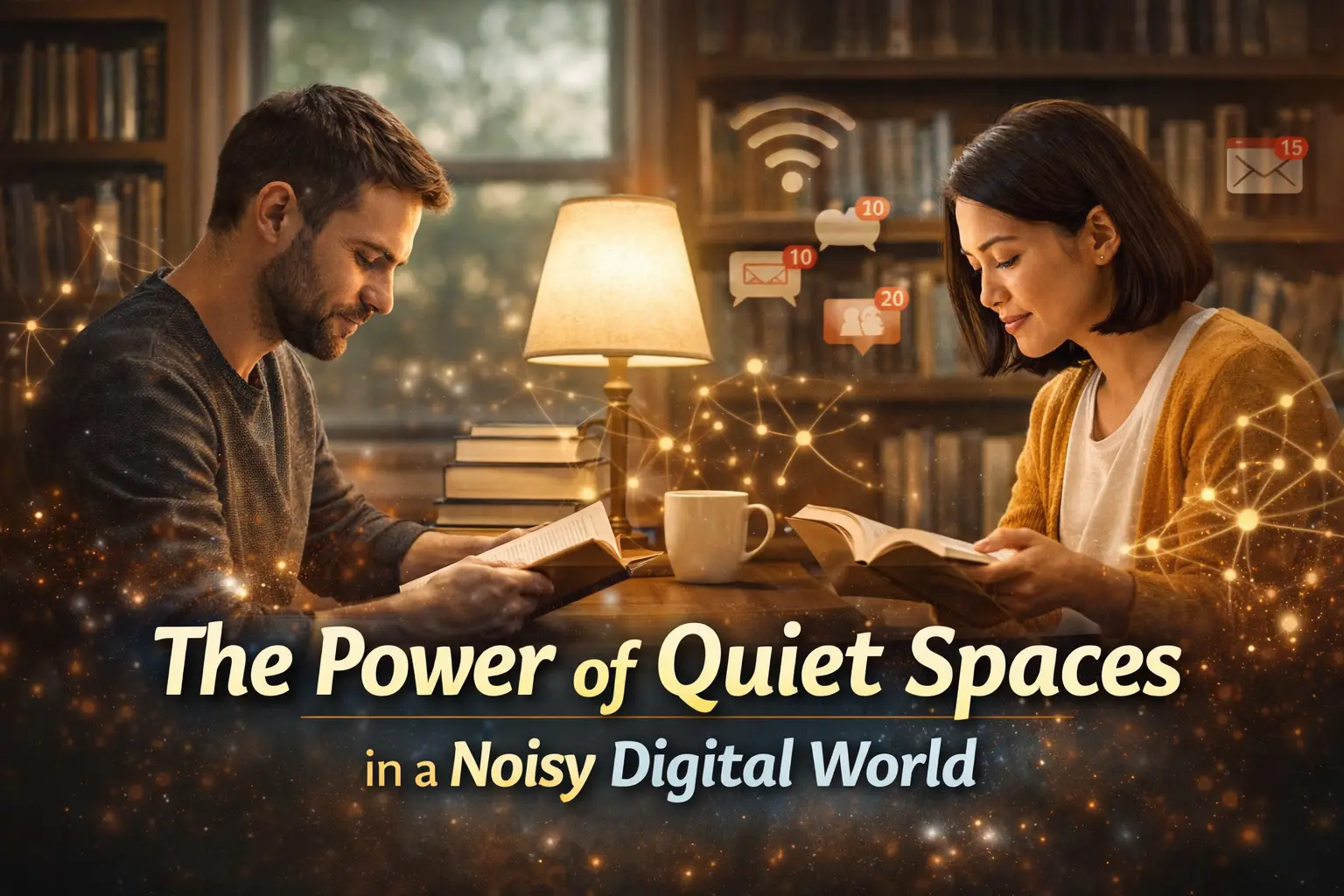
The Power of Quiet Spaces in a Noisy Digital World
We live in a world that rarely goes silent.
From the moment we wake up to the moment we fall asleep, we are surrounded by noise—notifications, conversations, media, and a constant stream of information competing for our attention. Even in moments of rest, many of us reach for our phones, filling silence with scrolling.
But what if the real advantage in today’s world isn’t found in more noise—but in less?
Quiet spaces have become one of the most powerful and underrated tools for clarity, focus, and personal growth. In a noisy digital world, silence is no longer empty—it’s essential.
The Cost of Constant Noise
Noise doesn’t just come from sound—it comes from information overload.
Every alert, message, and update pulls your attention in a different direction. Over time, this constant interruption fragments your thinking. It becomes harder to focus, harder to reflect, and harder to think deeply.
Many people don’t realize how much this affects them until they step away from it.
Mental fatigue, reduced productivity, and a sense of overwhelm are often the result of too much input and not enough space to process it.
That’s where quiet spaces come in.
Why Silence Matters
Silence gives your mind room to breathe.
In quiet environments, your brain can slow down, organize thoughts, and make connections. It allows you to move from reactive thinking to intentional thinking.
This is where clarity is formed.
When you remove distractions, you begin to notice ideas more clearly. You think more deeply. You become more aware of your own thoughts instead of constantly reacting to external input.
In many ways, silence is where real thinking begins.
The Role of Reading in Quiet Spaces
Reading naturally pairs with quiet environments.
When you sit with a book in a calm space, you create a powerful combination—focused attention and meaningful content. This allows you to fully engage with ideas, absorb information, and reflect on what you’re learning.
Unlike digital content, which often encourages quick consumption, reading invites you to slow down.
It creates a rhythm that supports deeper understanding and mental clarity.
This is why libraries have remained relevant for so long.
Libraries: Designed for Focus
Libraries are more than just buildings filled with books—they are environments intentionally designed for quiet and concentration.
They offer a break from the outside world. A place where distractions are minimized and thinking is prioritized.
But today, the idea of a “library” is evolving.
Communities like the Library User Group are extending this concept beyond physical spaces. They are creating environments—both digital and social—where quiet focus and meaningful engagement are encouraged.
It’s not just about where you read, but how you read.
Creating Your Own Quiet Space
You don’t need a traditional library to benefit from quiet.
A quiet space can be created anywhere—a corner of your home, a comfortable chair by a window, or even a few minutes of uninterrupted time during your day.
The key is intention.
Turn off notifications. Step away from distractions. Give yourself permission to focus on one thing at a time.
Even a short period of quiet can reset your mind and improve your ability to think clearly.
The Competitive Advantage of Stillness
In a world where most people are constantly distracted, those who can find and use quiet spaces gain a powerful advantage.
They think more clearly. They make better decisions. They are more productive and more creative.
While others are reacting to noise, they are responding with intention.
This is not just a lifestyle choice—it’s a strategy for growth.
From Silence to Strength
Quiet spaces do more than reduce noise—they build strength.
They strengthen focus, improve mental clarity, and create space for personal development. When combined with reading, they become even more powerful.
The Library User Group encourages this balance—providing a community that values both connection and focus, both discussion and reflection.
It’s a reminder that growth doesn’t always come from doing more. Sometimes, it comes from doing less—and doing it with intention.
Reclaiming Your Attention
Your attention is one of your most valuable resources.
Every moment you spend in noise is a moment your mind is divided. Every moment you spend in quiet is a moment your mind can rebuild, refocus, and grow.
In a noisy digital world, quiet is not a weakness—it’s a strength.
Find your space. Open a book. Embrace the silence.
Because in that silence, you may discover your greatest clarity.
We write rarely, but only the best content.
