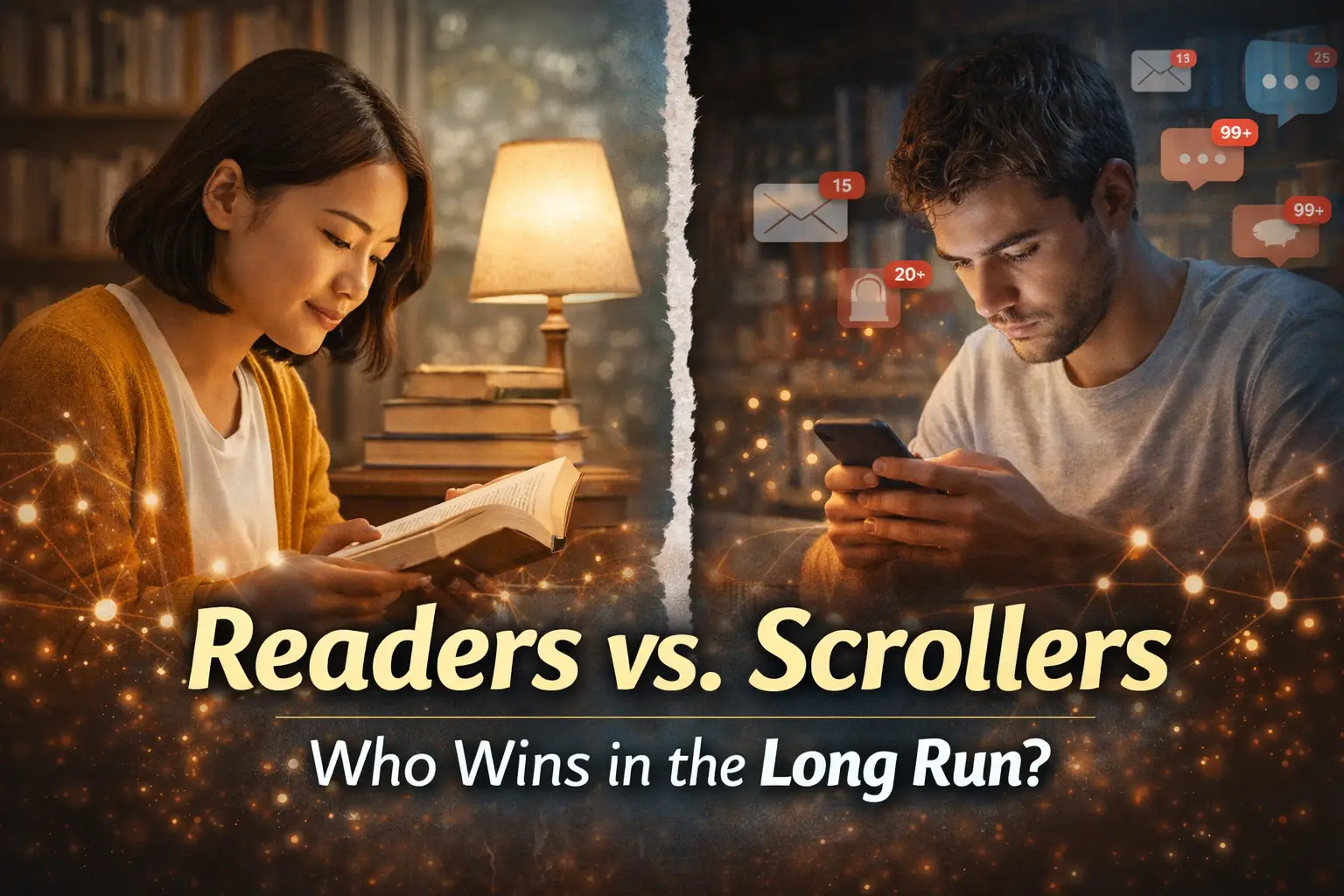
Readers vs. Scrollers: Who Wins in the Long Run?
In today’s digital world, nearly everyone falls into one of two habits—reading or scrolling.
Scrolling is fast, effortless, and endlessly available. With a simple swipe, you can consume hundreds of pieces of content in minutes. It’s designed to keep you engaged, entertained, and constantly coming back for more.
Reading, on the other hand, is slower. It requires focus, patience, and intention. It asks more of you—but it also gives more in return.
So the question becomes: in the long run, who truly wins—the readers or the scrollers?
The Immediate vs. The Lasting
Scrolling delivers instant gratification.
It provides quick bursts of entertainment, short snippets of information, and a constant stream of novelty. But the experience is often shallow. You move from one piece of content to the next without fully engaging or retaining much of what you see.
Reading offers something different.
It demands your attention, but in exchange, it provides depth. When you read, you engage with ideas, follow narratives, and build understanding over time. Instead of jumping between thoughts, you stay with one long enough to absorb it.
In the moment, scrolling may feel easier—but over time, reading proves more valuable.
The Battle for Attention
Your attention is one of your most valuable assets.
Scrolling trains your brain to expect constant stimulation. It shortens attention spans and makes it harder to focus on anything for an extended period. The more you scroll, the more your brain craves quick hits of information.
Reading does the opposite.
It strengthens your ability to concentrate. It teaches your mind to stay engaged, to follow complex ideas, and to think critically. Over time, this builds a level of mental discipline that sets readers apart.
In a world full of distractions, the ability to focus becomes a competitive advantage.
Knowledge vs. Consumption
Scrolling exposes you to information, but it rarely leads to true understanding.
You may see headlines, quotes, or short videos, but they often lack depth and context. The information comes quickly—and disappears just as fast.
Reading transforms information into knowledge.
It allows you to explore topics in detail, understand different perspectives, and connect ideas in meaningful ways. This deeper level of engagement leads to better decision-making, stronger communication skills, and a more informed worldview.
Readers don’t just consume—they learn.
Mental Growth vs. Mental Fatigue
After extended scrolling, many people feel drained.
Despite consuming large amounts of content, there’s often a sense of mental fatigue without real satisfaction. It’s a cycle of stimulation without fulfillment.
Reading has the opposite effect.
While it requires effort, it often leaves you feeling enriched, inspired, and mentally refreshed. It stimulates imagination, encourages reflection, and provides a sense of accomplishment.
Over time, this difference adds up.
The Long-Term Outcome
The real difference between readers and scrollers becomes clear over time.
Readers build knowledge, strengthen focus, and develop critical thinking skills. They grow steadily, gaining insights that compound over months and years.
Scrollers stay busy—but often without meaningful progress.
They are informed in fragments but lack depth. Their attention is divided, their focus weakened, and their growth slowed by constant distraction.
In the long run, the advantage belongs to those who choose depth over distraction.
Finding Balance in a Digital World
This isn’t about eliminating scrolling entirely. Digital content has its place. It can inform, entertain, and connect us in valuable ways.
But the key is balance.
When reading becomes a consistent habit, it counteracts the effects of constant scrolling. It restores focus, builds knowledge, and creates space for deeper thinking.
The Role of Community
Choosing to read consistently is easier when you’re not doing it alone.
The Library User Group provides a space where readers come together to share ideas, discuss books, and support each other’s growth. It turns reading into a shared experience—one that keeps you motivated and engaged.
Instead of competing with distractions, you become part of a community that values focus and learning.
Who Wins?
In the end, the answer is clear.
Scrolling may win in the moment—but reading wins in the long run.
Because while scrolling fills time, reading builds a future.
The choice is yours—consume endlessly, or grow intentionally.
Turn the page, and choose the path that leads forward.
We write rarely, but only the best content.
